
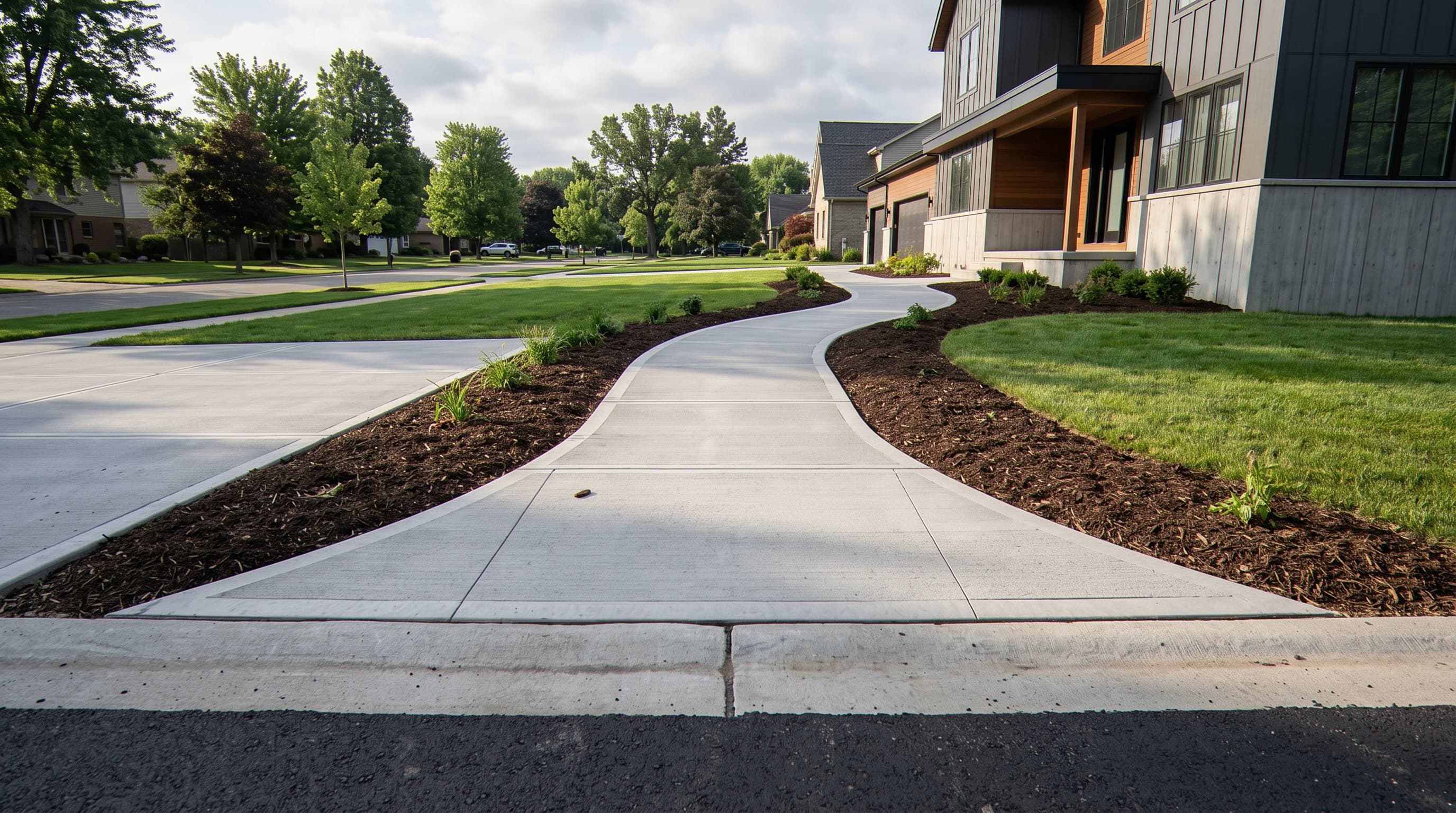
Sidewalks & Walkways · Ann Arbor

Concrete Sidewalks and Walkways in Ann Arbor, MI

We pour flat, even sidewalks and garden paths that stay safe to walk in every Ann Arbor season. Call us and we will look at your site, talk through the layout, and give you a clear plan.

Free Quote

Free Sidewalks & Walkways quote.

We reply within 1 business hour. No spam, ever.

What we install

Walkways built for how Washtenaw County weather actually moves

A good walkway does one quiet job. It gets people to your door without a trip, a wobble, or a puddle. That sounds simple, and on flat dry ground it would be. Ann Arbor does not give us flat dry ground. Our soil holds water, our winters swing above and below freezing many times over, and that movement is what cracks and heaves a slab that was poured without care. We build sidewalks and front walks with that ground in mind from the very first day.

When our crew starts a walkway, we begin under the surface. We dig out the path, set a compacted stone base, and grade it so water runs off instead of pooling against the concrete. We pour at a full thickness, add steel or fiber where the span calls for it, and cut control joints at the right spacing so the slab cracks along a clean line instead of a random one. Then we finish the top with a light broom texture that holds grip when the walk is wet or dusted with snow.

  • A compacted stone base under every path so the slab sits on ground that drains instead of ground that traps water.
  • Control joints cut at planned spacing, so the concrete cracks where we want it and not across the middle of your walk.
  • A gentle slope built in from the start that carries rain and melt away from the house and off the surface.
  • A broom finish that keeps footing steady when the walkway is wet, frosted, or covered in a light snow.
  • Clean edges and even width along the whole run, so the path reads as one deliberate line from curb to door.
We would rather spend an extra hour on the base than come back next spring to fix a slab that moved.

Most of our walkway work in Ann Arbor falls into two buckets. Some folks want a fresh front walk that lifts the look of the whole yard. Others have an old sidewalk that has lifted, cracked, or sunk into a lip that catches a toe. We handle both. On a replacement we take out the failed section, fix whatever caused it below grade, and pour a new slab that lines up flush with what stays. On new work we lay out the route with you first, walk it in the open air, and set the shape before a single bag of concrete is opened.

If your walk is cracked, tilted, or just tired, call us. We will come look at it, tell you straight what it needs, and get you on the schedule without a runaround.

Materials

What we build your walkway from

Most sidewalks and paths we pour use a standard concrete mix rated for our climate, placed on a stone base and reinforced to suit the span. For a plain gray walk this is the workhorse, and it is what most Ann Arbor front walks are made of. We can add color to the mix or a texture to the top if you want the path to carry more style than a flat slab.

For homeowners who want the walk to feel like part of the landscape, we also set pavers or lay a stamped and colored concrete surface that mimics stone or brick. Each option trades a bit of cost and upkeep for a different look. We walk you through what each one does through an Ann Arbor winter before you decide, so the choice fits your yard and not just a photo you saved.

  • Standard poured concrete for a clean, low fuss front walk.
  • Colored or tinted concrete when you want warmth without stamping.
  • Stamped concrete that reads as stone or brick under your feet.
  • Set pavers for a segmented path that flexes with the ground.
What about the alternatives?

Walkway surfaces, side by side

Here is how the common walkway options stack up for an Ann Arbor yard, so you can see why we lean toward the ones we do.

Poured concrete walk

Our default for most front walks. One solid slab on a proper base, strong against salt and snow, and easy to keep clear with a shovel or a blower.

Recommended

Stamped concrete path

A poured slab pressed with a stone or brick pattern. Great curb appeal, but the color coat wants a reseal every few seasons to stay sharp.

Acceptable

Interlocking pavers

Individual units set on sand and stone. They look sharp and flex with the ground, though weeds and shifting joints ask for more upkeep over time.

Acceptable

Exposed aggregate concrete

Concrete with the top washed to reveal the stone. It grips well underfoot and hides wear, but the rougher surface is harder to shovel clean.

Acceptable

Gravel or crushed stone path

Cheap to lay and quick to install, yet it scatters, sinks into mud, and turns into a rutted mess once our freeze and thaw season sets in.

Skip

Asphalt walkway

Fine for a driveway, poor for a walk. It softens in summer heat, cracks at the edges, and looks out of place running up to a front door.

Skip
How it goes

From quote to walk-on, fast.

01

Your inquiry

Call or send the short form with what is going on at your place. A sentence or two is plenty for the first step.

02

We talk it through

We go over the situation on the phone, ask the questions that matter, and tell you what we would do next.

03

A clear plan

You get a plain-language rundown of the work, the order it happens in, and what to expect on the day.

04

The work gets done

Our crew shows up when we said, does the job, and walks you through the result before leaving.

Before you book

Straight answers before you commit

A new walkway is a real decision, so here are the honest answers to the things people ask us most before we pour.

Will a new sidewalk crack like my old one did?
Every concrete slab moves a little, so we plan for it rather than pretend it will not happen. We cut control joints at set spacing so any crack follows that line instead of wandering across the walk. Paired with a solid base and the right thickness, that is what keeps a new slab looking clean for the long run.
Can you match the walk to my existing concrete?
In most cases yes. We can tune the finish and the joint pattern to sit close to what you already have, so a replaced section does not shout for attention. On color we get you close, though fresh concrete always starts a shade lighter and settles in as it cures.
How do you keep the walkway safe in winter?
Two ways. We finish the top with a broom texture that holds grip when it is wet or frosted, and we build in a slope so melt water runs off rather than freezing in a sheet on the surface. We will also talk you through which deicers are kind to concrete and which ones chew at it.
How fast can you start once I say go?
It depends on the season and how full our schedule sits, but we move fast on quotes and we tell you a real window rather than a vague someday. Once we walk the site and settle the layout, we book you a start date and we keep to it.
Do I need a permit for a new sidewalk?
Sometimes, and it depends on where the walk sits and whether it touches the public right of way. We know how work like this usually goes in the Ann Arbor area, and we will flag it early so nothing stalls your project. If a sign off is needed, we help you get the paperwork moving.
What if my walkway has sunk instead of cracked?
A sunken slab is often a base or drainage problem, not a concrete problem. In some cases we can lift and relevel the slab you have. In others the smarter move is to pour fresh, because a slab that dropped once on a bad base will usually drop again. We look and we tell you which one your walk really needs.
Aftercare

Keeping your walkway solid for years

A poured concrete walk asks for very little, but a few small habits keep it looking new and stretch its life well past the day we leave. The two things that wear concrete fastest here are water sitting on the surface and harsh salt eating at it through winter. Handle those and your walk will hold up through many Ann Arbor seasons with almost no fuss.

  • Seal the surface every couple of years so water beads off instead of soaking into the concrete.
  • Keep the walk shoveled and clear so snow does not melt, refreeze, and pry at the surface overnight.
  • Reach for a gentler deicer and skip the rock salt, which is the roughest option on fresh concrete.
  • Sweep grit and leaves off through fall so nothing stains the slab or holds moisture against it.
  • Steer the mower and the trimmer so the blade does not chip the edges as you cut the lawn.
  • Call us early if you spot a lip, a crack, or a low spot, since a small fix now beats a full pour later.
FAQ

Questions we hear about sidewalks and walkways

Ready when you are

Let's make your next steps easier

Tell us what is going on at your Ann Arbor home and we will walk you through the options. One call or one short form is all it takes.

Call (734) 389-7912Make your inquiry
CallContact us